
A safe AI that turns kids' questions into things they can make.
Ask Pip a real question — “How can we warn fishermen when the sea gets rough?” — and it answers with simple steps anyone can follow, like a recipe. Step by step, making things grows into real coding skills. Nothing off-topic. Ever.
Other AI hands kids the answer.
Piplab gives them the tools to build it.
Screen time that ends with something to show you.
They pick what to make — a game, a website, a gadget — and Pip gets them to a version that works. Websites get a real address you can open on your phone.
Thirty students. No hardware. One safe AI.
Point a class at a kit that already works — a game, a website or a gadget — and every student starts from something that runs instead of a blank page.
Bring safe AI to a classroom you already have.
It runs in the browser on the laptops in the room. No install, no hardware, and no student email addresses.
What a kid opens is a workshop, not a chat box.
Projects to continue, a starting point to pick, and mini-missions that teach a skill while they build.
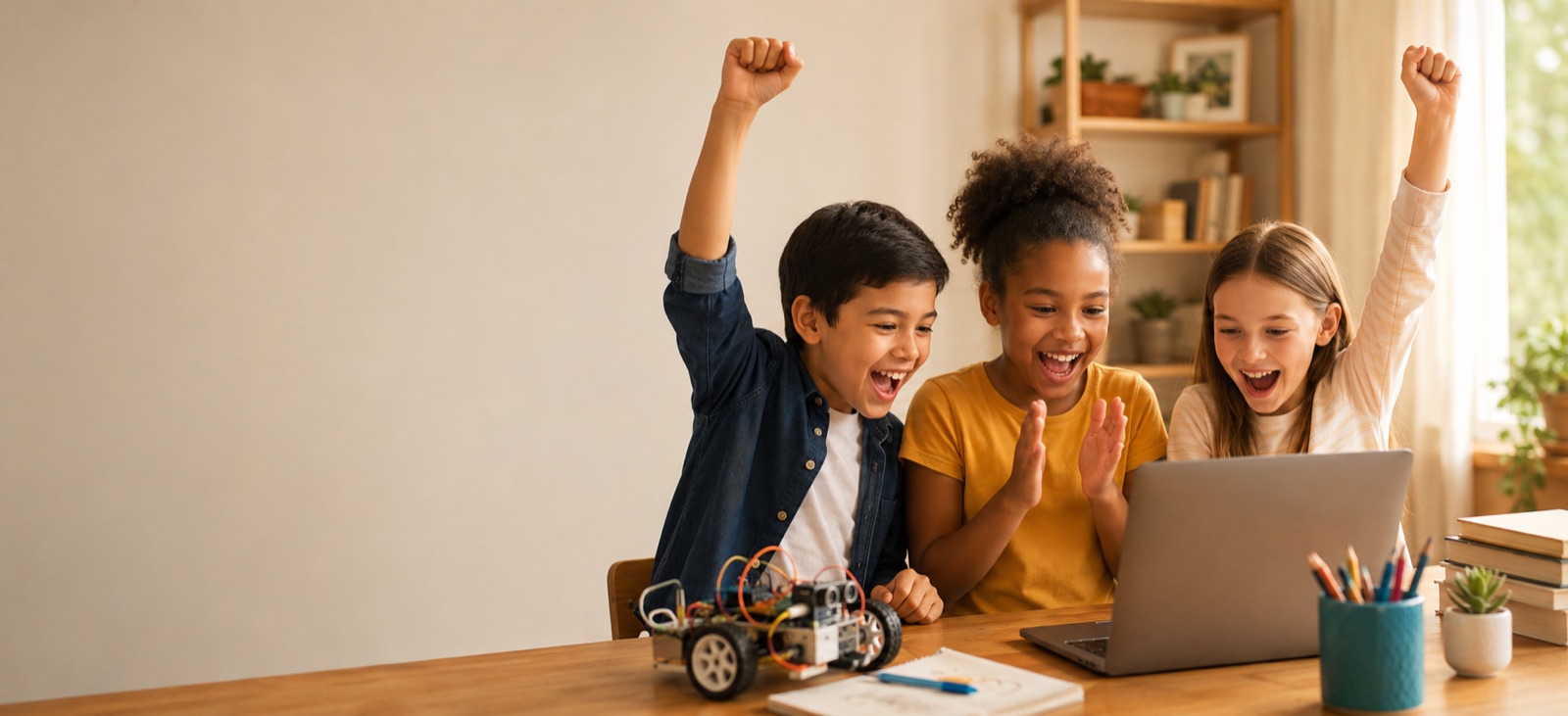
Thirty challenges. No kit, no code to start from — a blank screen and a problem. The brief says what it has to do. It never says how. So two kids can hand in very different things and both be right.
That is the habit worth having. Most children will grow up using AI to get answers. The ones who can look at a problem, decide what needs building and then get it built are the ones who will be directing it — in jobs that do not have names yet.
They stop asking for answers. They work out what to build.
The freezer keeps getting left open, and nobody notices until the food has gone soft. Make something that notices.
A freezer alarm, built and tested on screen. Leave the door open a minute and it beeps. Leave it two and the light goes red. Shut the door and it stops.
Why it beeped straight away at first — and why everyone had learned to ignore it by day two.
One question, five steps, something real at the end.
Follow a real project from the moment a kid asks the question.
“How can I warn fishermen when the swell is too dangerous?”
Every project starts with a real question. Pip helps sharpen it until it is specific enough to build against.
Turn one big problem into small, solvable steps.
Pip asks what has to happen first. The learner writes the plan, so they understand the shape of the solution before any AI touches it.
Build the logic with blocks they can read.
Each step becomes a block. Kids can see the whole program at once, rearrange it, and watch what changes when they do.
Reveal the code behind the blocks.
The same program, shown as real code. Nothing new to learn from scratch — just the version they already understand, written differently.
Test it, judge it, and say why.
Pip asks the learner to check the output against reality. Getting an answer is not the finish line — knowing whether the answer is right is.
Step six: the bit they come and show you.
Twenty-five of these already work. A child opens one, sees how it was made, and changes it until it is theirs — and none of it needs a single thing plugged into your house.
Door Chime
Press the button and it chimes twice, then says out loud that someone is at the door.
Night Light
Cover the sensor with your hand and a warm orange glow switches itself on. Let go and it fades.
Race Timer
Press go, run past the finish line, and it tells you your time and takes a photo finish. It remembers your best.
Real questions. Real creations.
Projects kids build from problems in their own world.
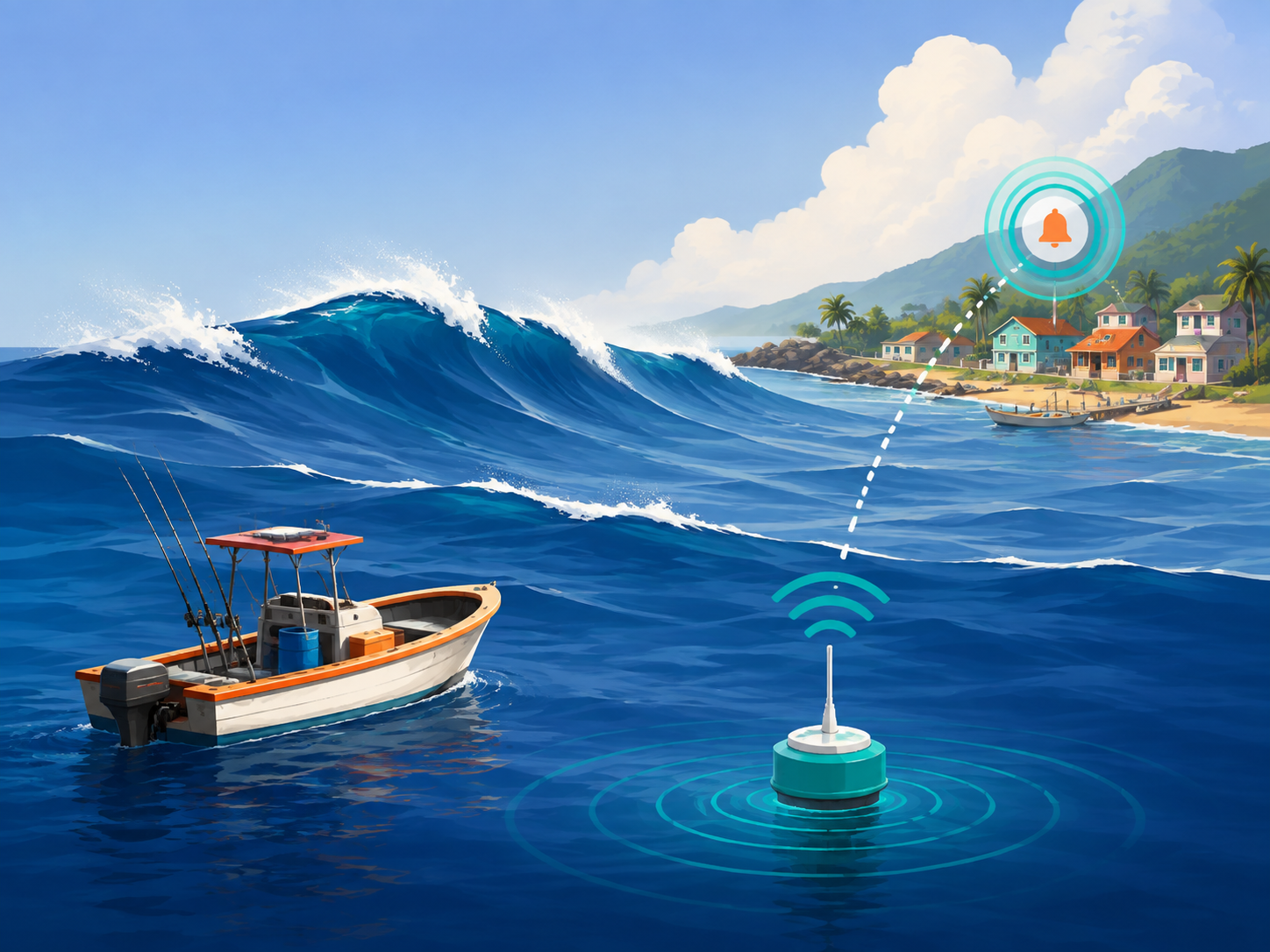
Swell alert for fishermen
Predict dangerous swells and send timely alerts to the boats going out.
Goat farm feed calculator
Work out the right feed blend and monthly cost.
Hurricane tracker
Track storms and rainfall for your area.
Beach crowd counter
Estimate busy times from simple photos.
Start free. Stay free.
Full pricing →One child, 6h of AI a week, core projects and parent visibility.
Up to 30 students, advanced tutor tools and priority support.
A term-long pilot for one class, set up with you. We work the cost out together.
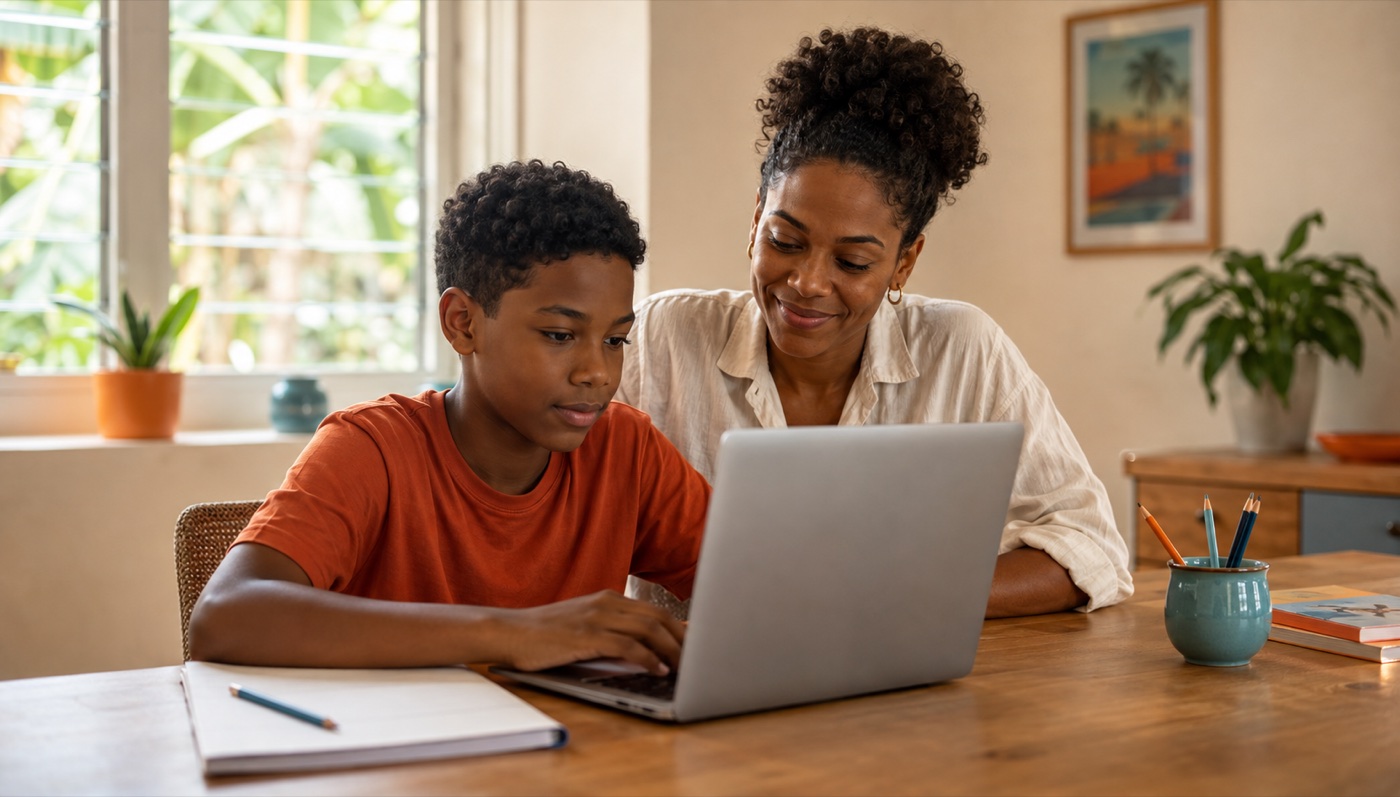
Give their curiosity somewhere useful to go.
Free for up to three children. No card, no lock-in, and nothing to install — they can be building something in the next ten minutes.